Technical Report
1995
Abstract / Executive Summary Overview
groupMartin Huber, Chrisostom J. Opondo, Jan C. Cappon, Martin Kamau Gitau, Dr. Martin Huber, Eric Itote, Boniface P. Kiteme, Laban Macopiyo, Martin M. Mucuthi, Dr. Elijah N.D. Ndegwa, Robinson Ng'ethe, Chrisostom J. Opondo Laikipia Research Programme (LRP), Nanyuki, Kenya, and Group for Development and Environment, Institute of Geography, University of Berne, Switzerland
Read publicationarrow_forward
Technical Report
2000
This document aims to address the theme ‘to contribute to improved water resources management through the development of appropriate water management tools, leading to informed decision making in water resource…
groupF.N. Gichuki, J. Kihara and J. Ndun’gu CETRAD
Read publicationarrow_forward
Technical Report
2001
The basin mainly consists of drylands (areas where water scarcity is the main constraint to development). However, it is not simply the low levels of rainfall that make rain-fed agriculture…
CETRAD
Read publicationarrow_forward
Baseline Survey
2005
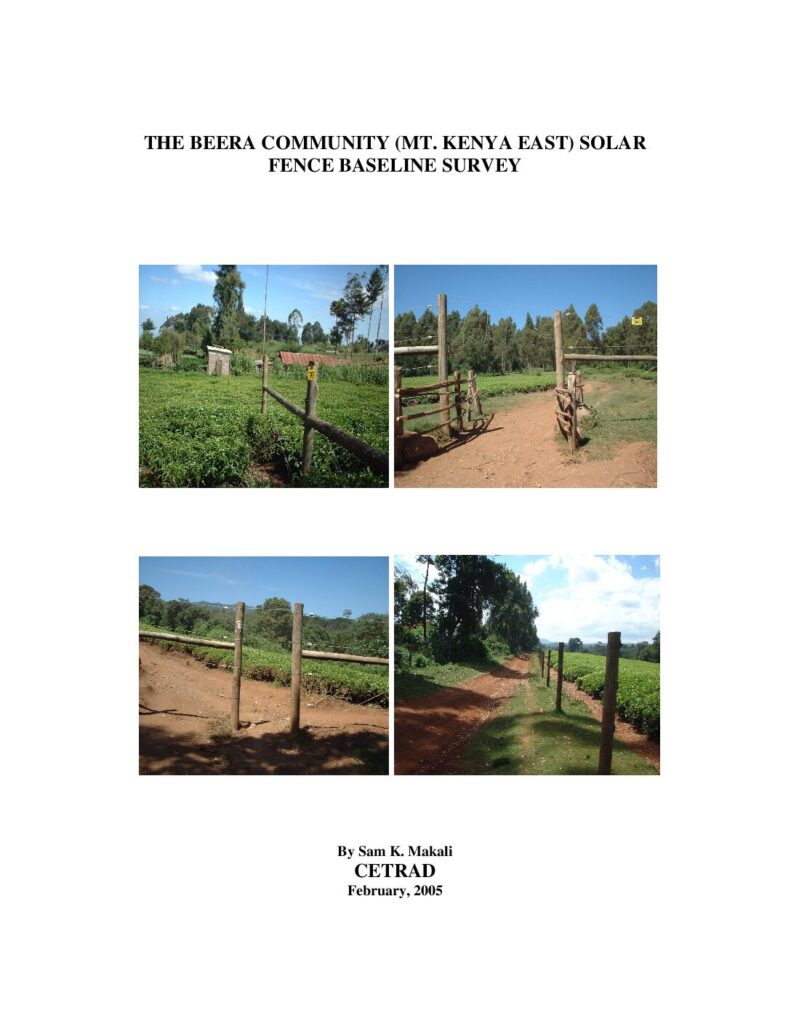
BACKGROUND The issue of human wildlife conflict is becoming a major concern world wide and governments, particularly in developing countries have not been able to address it effectively. The main…
groupSam K. Makali CETRAD
Read publicationarrow_forward
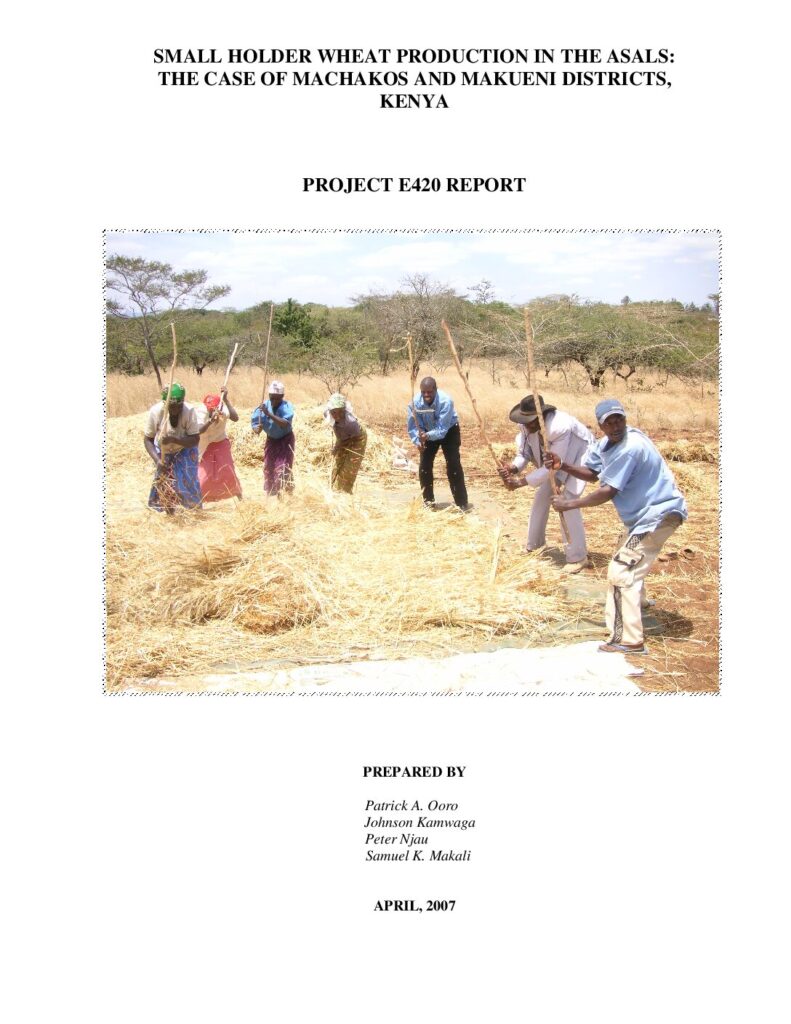
Technical Report
2007
Introduction The Kenya Agricultural Research Institute (KARI) through its Njoro Field research Centre has, over the years, been developing appropriate wheat varieties for production in the ASALs as a strategy…
groupPatrick A. Ooro, Johnson Kamwaga, Peter Njau, Samuel K. Makali
Read publicationarrow_forward
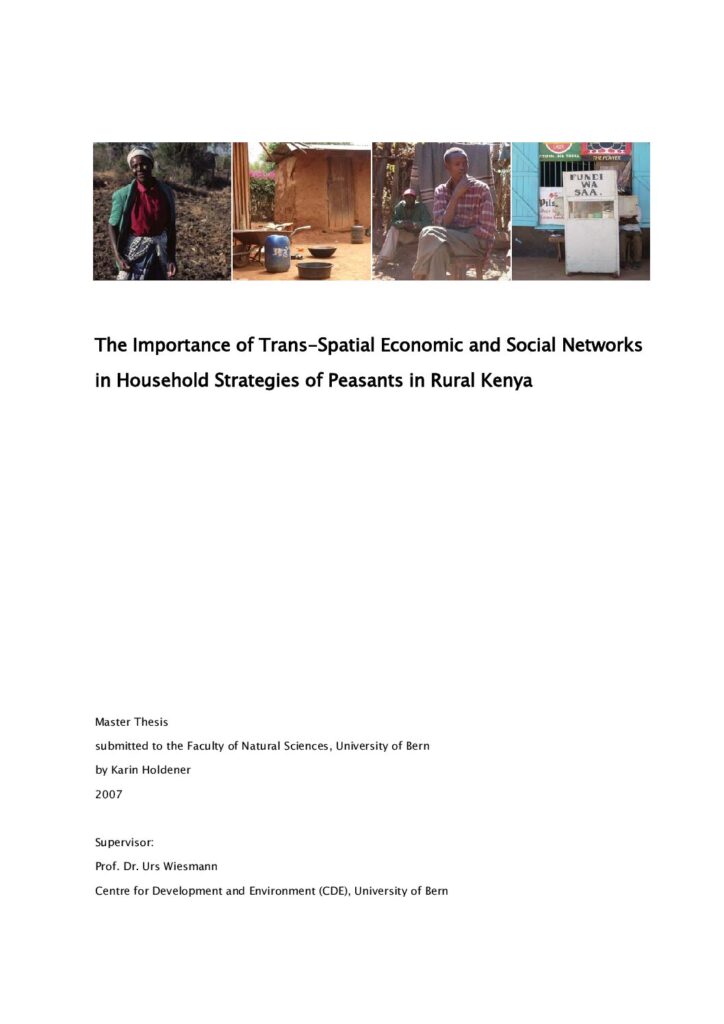
Master's Thesis
2007
The present study about peasant household strategies in Laikipia District, Kenya was accomplished between November 2005 and October 2006. It is a tracer study in the sense that it is…
groupKarin Holdener, Prof. Dr. Urs Wiesmann Centre for Development and Environment (CDE), University of Bern
Read publicationarrow_forward
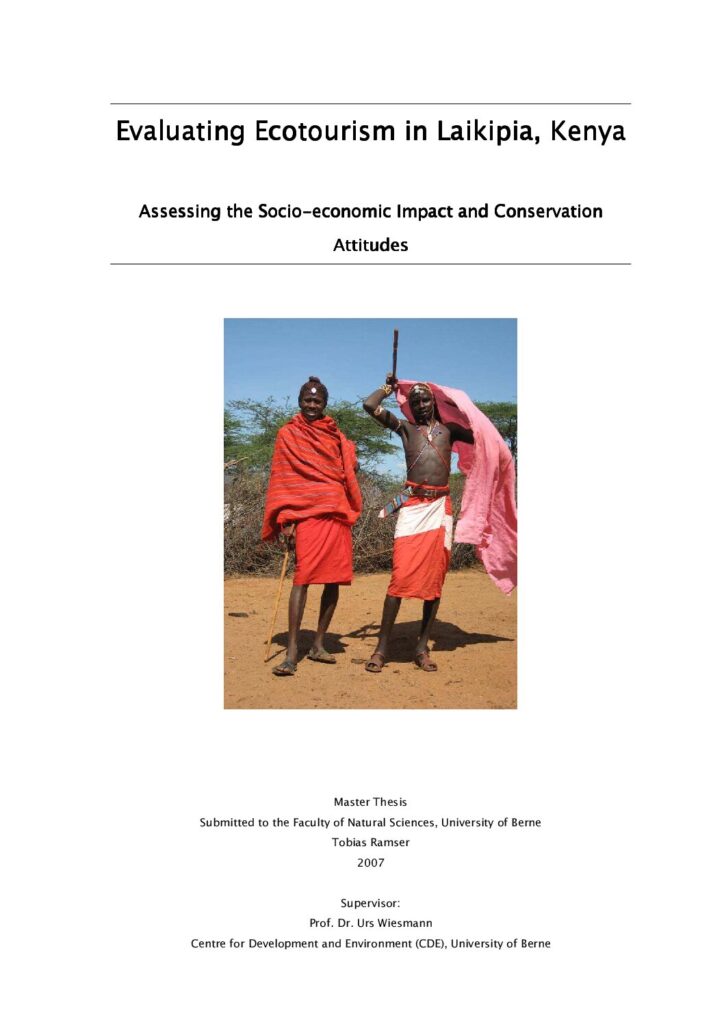
Master's Thesis
2007
Preface Given the opportunity to study ecotourism in Laikipia, I was tempted on multiple levels. I find ecotourism very promising in its idea that environmental conservation pays for itself. The…
groupTobias Ramser, Prof. Dr. Urs Wiesmann Institute of Geography, University of Bern
Read publicationarrow_forward
Academic Thesis
2008
Summary Until 1963 Kenya was under colonial rule and the highlands around the Mt. Kenya were occupied by white settlers. Large scale ranches and farms dominated the landscape and the…
groupNatalie Schäfer, Prof. Dr. Urs Wiesmann, Dr. Hanspeter Liniger Center for Development and Environment, University of Bern
Read publicationarrow_forward
Journal Article
2009
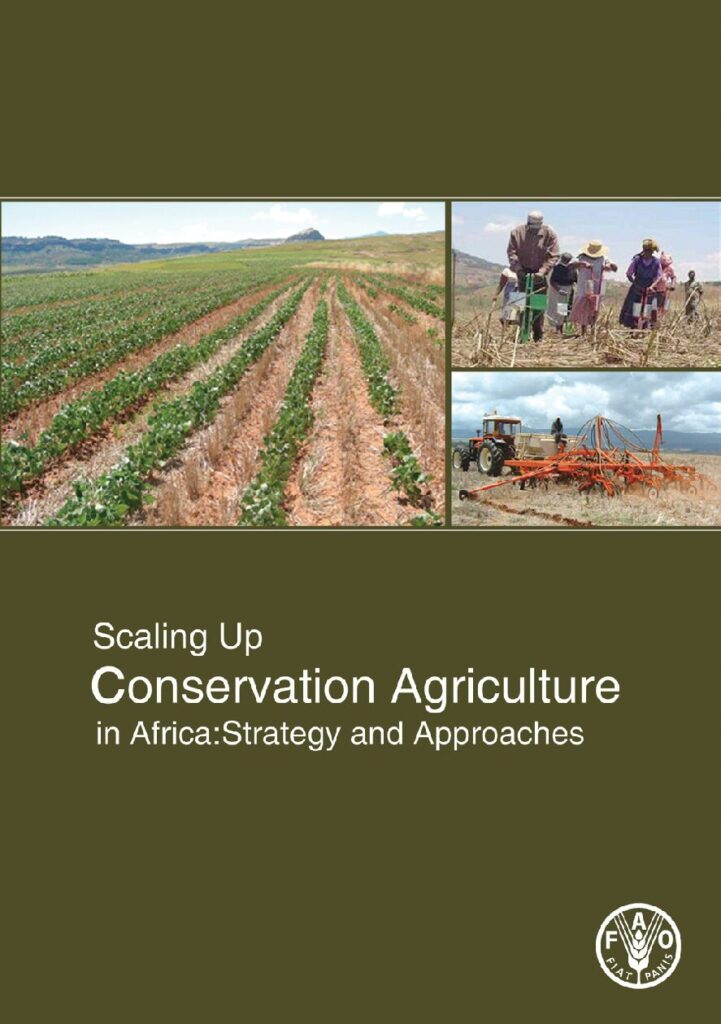
Preface Most specialists agree that Africa has an extremely wide range of soils and climatic conditions, and that most of the continent’s soils are of poor quality compared to other…
The FAO Subregional Office for Eastern Africa
Read publicationarrow_forward
Working Paper
2009
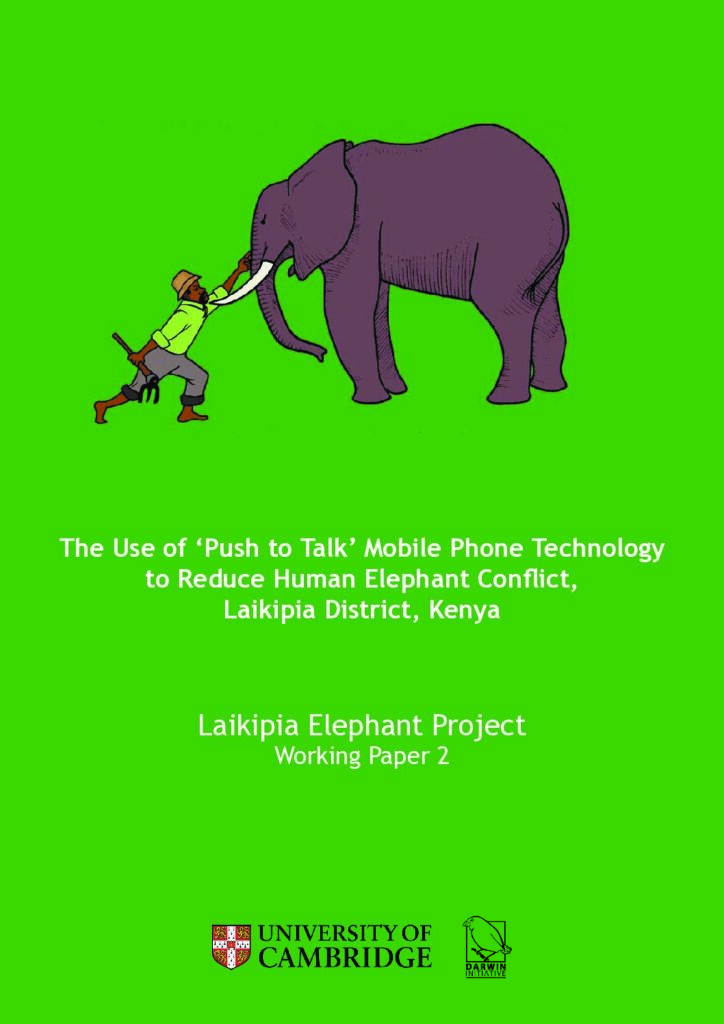
Human-elephant conflict is a significant problem in Kenya, as in many other parts of Africa and Asia where wild elephant populations persist outside protected areas. Various methods have been tried…
groupMax Graham, Christine Greenwood, Gabriel Kahiro, William M. Adams University of Cambridge
Read publicationarrow_forward
Technical Report
2009
The Mt. Kenya catchment is an important ecosystem and contributes significantly to the economic development of the country. The ecosystem supports livelihoods of thousands of households through water provision for…
groupCentre for Training & Integrated Research in ASAL Development (CETRAD)
Read publicationarrow_forward
Book Chapter
2011
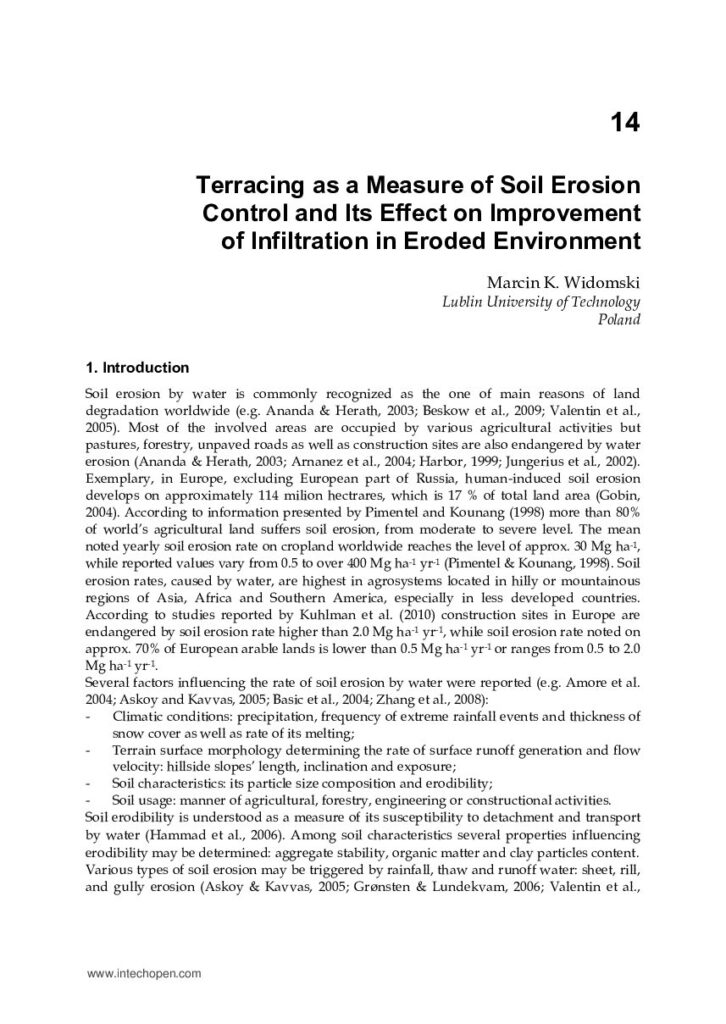
The book deals with several aspects of soil erosion, focusing on its connection with the agricultural world. Chapters’ topics are various, ranging from irrigation practices to soil nutrient, land use…
groupMarcin K. Widomski InTech
Read publicationarrow_forward